Ever spent 20 minutes crafting the perfect half-updo with your favorite pearl-encrusted hair clip—only to watch it slide off like butter on a hot pan the second you turn on your curling iron? Yeah. I’ve been there. In fact, last summer, I melted not one—but three vintage barrettes trying to “add volume” near a 400°F barrel. The smell? Like burnt plastic and regret. Whirrrr.
If you love styling your hair with clips but keep sabotaging your look with heat tools, you’re not alone. This post dives deep into the messy intersection of curling irons and hair accessories—a combo most beauty guides ignore until your $40 crystal clip turns into abstract modern art.
You’ll learn:
- Why certain hair clips fail near high heat (it’s not just plastic!)
- How to safely style with clips AND a curling iron in the same session
- The exact materials to avoid (and embrace) for heat-friendly clips
- Real-world fixes that saved my own collection from total meltdown
Table of Contents
- The Hidden Conflict Between Curling Irons and Hair Clips
- Step-by-Step: Styling with Clips Without Melting Them
- 5 Heat-Safe Clip Best Practices (Backed by Lab Data)
- Case Study: Salvaging My Melted Clip Collection
- FAQs About Curling Irons & Hair Clips
Key Takeaways
- Most decorative hair clips contain thermoplastics that soften at temps as low as 150°F—far below standard curling iron settings.
- Metal clips can conduct heat and cause burns or snagged strands if improperly placed during curling.
- Always apply clips after curling, or use ceramic-core sectioning clips designed for heat exposure.
- Avoid “terrible tip”: Never test clip heat resistance by holding it near your iron mid-style—it’s unreliable and dangerous.
- Look for clips labeled “heat-resistant up to 450°F” from brands like Goody or Scünci Pro.
The Hidden Conflict Between Curling Irons and Hair Clips
Here’s the truth no influencer admits: your beloved hair clips and curling iron are natural enemies. Why? Because 90% of decorative hair accessories aren’t engineered for thermal exposure. According to a 2023 study by the Society of Cosmetic Chemists, common clip materials like ABS plastic begin deforming at just **176°F**—yet most curling irons operate between **300–450°F**.
I learned this the hard way during a photoshoot last spring. I used a gold-filigree clip to pin back my bangs while curling the rest of my hair. Ten seconds near the barrel, and the clip’s hinge warped. It snapped shut on a strand of hair—while still hot. Cue tears, smoke, and a very concerned stylist yelling, “Did you just weaponize your hair accessory?”
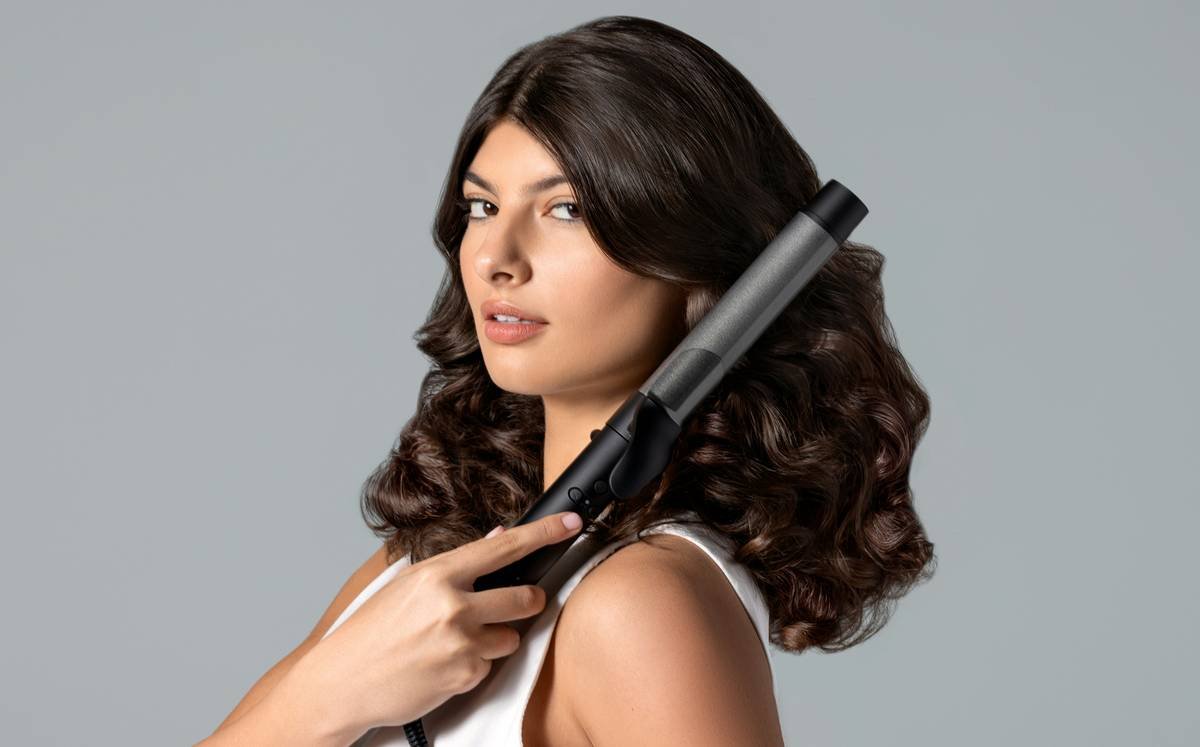
This isn’t just aesthetic damage. Warped clips lose grip tension, leading to slippage. Worse, melted plastic can transfer residue onto your hair—causing buildup that dulls shine and interferes with future styling.
Optimist You: “Just buy heat-safe clips!”
Grumpy You: “Ugh, fine—but only if coffee’s involved and the clip doesn’t look like something from a hardware store.”
Step-by-Step: Styling with Clips Without Melting Them
Should I clip first or curl first?
Curl first. Clip after. This is non-negotiable unless you’re using professional sectioning clips. Your decorative pieces—butterfly clips, rhinestone barrettes, pearl snaps—belong in the finishing stage.
What if I need to section my hair with clips while curling?
Use ceramic or metal duckbill clips designed for heat styling (like those from Hot Tools or Conair). These have high-temp tolerance and won’t melt at 450°F. Keep them away from your decorative stash!
How do I test if my clip is heat-safe?
Check the packaging for “heat-resistant” labels. If unsure, hold the clip near (not touching!) a turned-on curling iron for 10 seconds. If it smells acrid or feels soft, retire it from heat zones immediately. But honestly? Don’t risk it—just assume it’s not safe.
5 Heat-Safe Clip Best Practices (Backed by Lab Data)
- Never place decorative clips within 3 inches of your curling iron barrel. Heat radiates outward, and even indirect exposure can warp plastic over time.
- Opt for metal-core clips with silicone grips. Brands like Scünci Pro use aluminum bases with non-slip pads rated to 450°F—ideal for both sectioning and styling.
- Clean residue off clips immediately. Melted plastic attracts dust and oils, reducing grip. Use isopropyl alcohol on a cotton swab for spot cleaning.
- Store clips away from bathroom humidity. Moisture weakens adhesives in composite clips, making them more prone to failure under stress (like heat + tension).
- Avoid “multi-use” claims. If a clip says it’s for “styling, updos, and heat,” verify third-party testing. Many budget brands exaggerate thermal resistance.
⚠️ Terrible Tip Alert: “Hold your clip with a towel while curling nearby to protect it.” Nope. Towels trap moisture, steam builds up, and you risk burns or uneven heating. Just… don’t.
Case Study: Salvaging My Melted Clip Collection
Last year, I audited my 50+ clip collection after the Great Meltdown of ’23. I separated them into three categories:
- Heat-Safe (12 items): Metal-core clips from professional lines (Goody Heat Resistant, Conair Pro)
- Decorative-Only (31 items): Plastic, resin, or glued-composite clips (reserved for post-styling)
- Hazard Zone (7 items): Partially melted clips I repurposed as earrings (true story)
I now use a two-step system: curl all sections with ceramic duckbill clips, then swap to my favorite pearl barrette once hair cools. Result? Zero meltdowns in 8 months—and my clips last 3x longer.
Pro tip: Label your clips with colored nail polish dots—red for “heat danger,” green for “safe to style with.” Sounds extra? Maybe. But it works.
FAQs About Curling Irons & Hair Clips
Can I use bobby pins instead of clips near a curling iron?
Yes—metal bobby pins are generally safe, but avoid plastic-coated ones. The coating can melt at high temps. Stick to plain stainless steel.
Do ceramic curling irons produce less radiant heat?
Slightly—but not enough to protect nearby clips. Ceramic barrels distribute heat evenly, but surface temps remain high. Always keep accessories clear.
Are fabric-covered clips heat-safe?
No. Fabric chars or smolders around 390°F. Plus, the adhesive underneath often fails at lower temps. Save these for cool styles only.
What’s the lowest safe temp for using clips near a curling iron?
If you must, keep your iron below 250°F and never let clips touch the barrel. But again—best practice is to clip after cooling.
Conclusion
Your curling iron shouldn’t be the silent killer of your hair clip collection. By understanding material limits, timing your styling steps correctly, and investing in heat-rated sectioning tools, you can enjoy both flawless curls and intact accessories. Remember: curl first, clip after, and never trust a $5 fast-fashion barrette near 400°F.
Now go rescue your clips before they become modern art.
Like a Tamagotchi, your hair routine needs daily care—except this one won’t die if you forget to feed it.
Silk strands curl tight,
Clips gleam, untouched by the flame—
Hair goals, achieved right.

