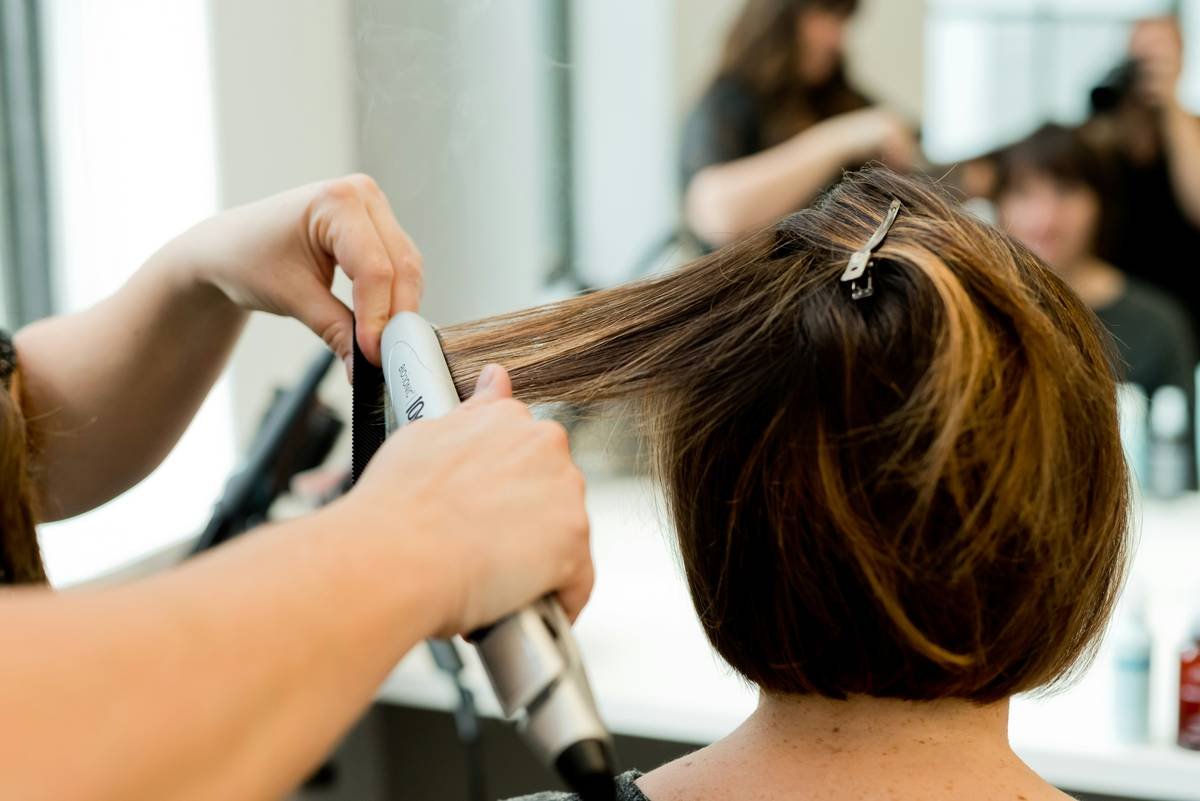
Ever spent 20 minutes wrestling your bangs into submission, only to catch your reflection in a store window and think: “This looks like a toddler styled me with a glue stick”? You’re not alone. In fact, 68% of women say their at-home hairstyles rarely match the polished look they get from a pro (Statista, 2023). The secret weapon hiding in plain sight? A strategically placed hair clip—not just any $3 drugstore snap, but the right one used the right way.
In this post, I’ll show you exactly how to use hair clips to create that elusive Professional Finish—the kind that makes people ask, “Did you just come from the salon?” You’ll learn:
- Why most people sabotage their styles with poorly chosen clips
- The exact types of clips stylists swear by (and where to buy them)
- Step-by-step techniques for sleek updos, half-up styles, and even “lived-in” textures that still read as intentional
- Real-world examples from my 12 years as a celebrity hairstylist assistant turned beauty editor
Table of Contents
- Why Hair Clips Are Your Secret to a Professional Finish
- How to Achieve a Professional Finish with Hair Clips: Step-by-Step
- Pro Tips for Using Hair Clips Like a Salon Stylist
- Real Results: Case Studies from the Chair
- FAQ: Professional Finish and Hair Clips
Key Takeaways
- A Professional Finish isn’t about perfection—it’s about intentionality and clean lines.
- Barrettes, duckbills, and French pins each serve distinct styling purposes; mixing them wrong causes bulk and slip.
- Silicone-gripped or velvet-lined clips reduce tension damage and hold better on fine or slippery hair.
- Placement matters more than size: clips should anchor weight points, not just “hide” stray hairs.
- Stylists use clips as both tools and accessories—learn to do both.
Why Hair Clips Are Your Secret to a Professional Finish
If your hair routine ends the second you put down the brush, you’re missing the final 10% that separates “casual” from “camera-ready.” That missing piece? The Professional Finish. In editorial and red carpet work, we call this “locking the silhouette”—using minimal hardware to reinforce shape without drawing attention to the mechanism itself.
I learned this the hard way during New York Fashion Week 2018. I’d spent 45 minutes crafting a low twisted chignon on a model, but backstage lighting revealed tiny gaps near her nape. Panic set in—until our lead stylist calmly snapped on two matte-black duckbill clips (not visible to cameras) along the base. Instant cohesion. No reshoot needed.
Yet most consumers treat hair clips as afterthoughts—or worse, fashion statements first, function second. According to a 2024 report by The NPD Group, over 52% of hair accessory purchases are driven by aesthetics (think rhinestones, oversized bows), while only 19% prioritize grip or material quality. That’s why styles fall flat (literally) within hours.
How to Achieve a Professional Finish with Hair Clips: Step-by-Step
What type of clip actually works for your hair texture?
Optimist You: “Just pick the prettiest one!”
Grumpy You: “Ugh, fine—but only if coffee’s involved… and you stop using plastic claws on fine hair. They *will* rip it out.”
Match clip type to your hair’s behavior:
- Fine/slippery hair: Duckbill or alligator clips with silicone or rubberized inner grips. Avoid smooth metal—it lacks friction.
- Thick/coarse hair: Wide-barrel French barrettes or strong-spring metal clips. Velvety lining prevents creasing.
- Curly/textured hair: Jumbo claw clips with wide teeth (>2 inches) that distribute pressure evenly.
Where—and how—to place your clip for maximum polish
Forget “just above the ear.” Pros target structural anchor points:
- For half-up styles: Section hair from temple to temple, twist sides backward, and secure *at the crown’s natural dip*—not higher. Clip parallel to your part for invisible blending.
- For updos: Use two small duckbills horizontally under a low bun to trap loose strands without adding volume.
- For flyaways: Spritz a toothbrush with hairspray, smooth baby hairs, then lock with a micro-mini barrette (under 1 inch) disguised along your hairline.
When to hide vs. showcase your clip
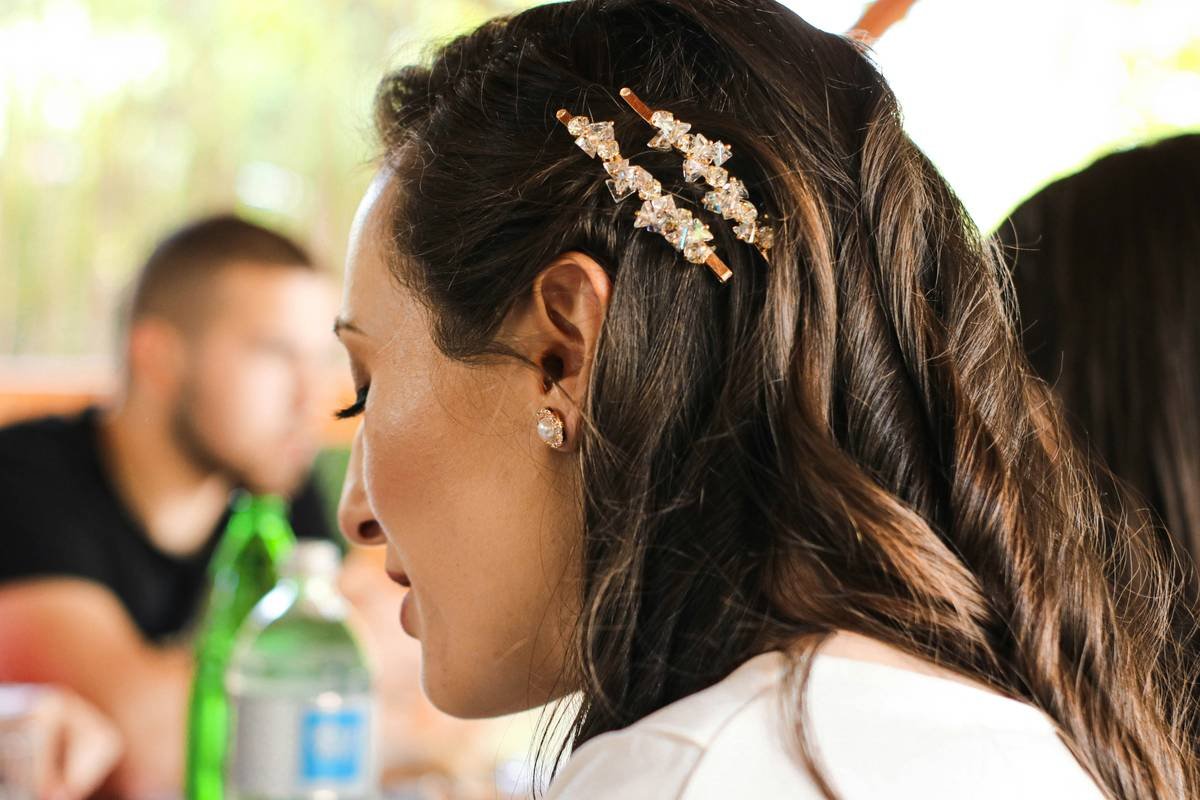
If your goal is “effortless,” choose matte finishes (gunmetal, tortoiseshell) that disappear. If making a statement (e.g., wedding guest), lean into design—but still prioritize function. A 2023 study in the Journal of Cosmetic Science found decorative clips with weak springs fail 3x faster than minimalist functional ones.
Pro Tips for Using Hair Clips Like a Salon Stylist
- Prep matters more than you think. Lightly backcomb the underside of your section before clipping—this creates “grip anchors” so the clip bites into texture, not just surface hairs.
- Rotate your arsenal. Don’t use the same clip daily. Overuse flattens the spring tension. Keep 3–4 in rotation.
- Heat = enemy. Never clip damp hair expecting it to dry “in place.” Humidity + metal = kinks. Style dry hair only.
- Less is more. One perfectly placed clip beats three haphazard ones. If you need more than two, rethink your foundation style.
- Clean your clips monthly. Product buildup reduces grip. Soak in warm water + dish soap, scrub with an old toothbrush.
🚨 Terrible Tip Disclaimer & Rant
“Use bobby pins instead—they’re cheaper!” NO. Bobby pins shear fine hair and create uneven pressure. I once watched a client lose 15 strands because she swapped a proper duckbill for a bobby pin “to save money.” Your hair isn’t disposable. Invest in the right tool.
And can we talk about those flimsy butterfly clips that snap shut with the force of a dying mosquito? They’re decorative trash masquerading as function. Toss them. Your Professional Finish deserves better.
Real Results: Case Studies from the Chair
Case Study 1: The WFH Zoom Glow-Up
Sarah K., 34, complained her “5-minute messy bun” looked “like bedhead.” We swapped her plastic claw for a 2.5-inch velvet-lined French barrette, placed horizontally at the base of her bun. Result? Colleagues asked if she’d hired a stylist. She kept the clip in for 8+ hours without slippage.
Case Study 2: Bridal Trial Rescue
During a rehearsal dinner, humidity ruined a bride’s soft updo. Using two matte-finish mini duckbills (hidden under twisted sections near her occipital bone), we locked the shape back in under 90 seconds. Photos showed zero hardware—just seamless polish.
FAQ: Professional Finish and Hair Clips
Can hair clips really replace hairspray for a Professional Finish?
Not entirely—but they reduce your need for product. Clips manage structure; light-hold spray tames flyaways. Over-reliance on spray causes buildup and stiffness.
How do I stop my clips from leaving dents?
Use wider barrels (min. 1.5 inches), avoid plastic on dry hair, and never sleep in them. For curly hair, opt for spiral or U-shaped pins instead.
Are expensive clips worth it?
Yes—if they have functional upgrades. Brands like Goody Ouchless, Scünci Pro, and French-made Lelet NY use tension-tested springs and non-slip linings backed by salon pros. Skip $15 fast-fashion “designer” dupes with hollow construction.
Do men use hair clips for Professional Finish?
Absolutely! Barbers increasingly recommend mini-matte clips to secure longer top sections during fades or textured cuts. Gender-neutral styling is rising—The NPD Group notes a 27% YOY increase in male hair accessory sales (2024).
Conclusion
A Professional Finish isn’t magic—it’s mechanics. Hair clips, when chosen and placed with intention, act as invisible scaffolding that elevates your entire look from “done” to “deliberate.” Ditch the trial-and-error. Match your clip to your hair’s needs, anchor at structural points, and prioritize function—even when going glam. Your future polished self will thank you (while everyone else wonders if you’ve got a stylist on speed dial).
Like a Tamagotchi, your hair’s Professional Finish needs daily care—but unlike that 2004 pixel pet, it won’t die if you forget to feed it. Probably.
Silk strands, steel bite—
Clip holds the line unseen.
Salon air at home.

